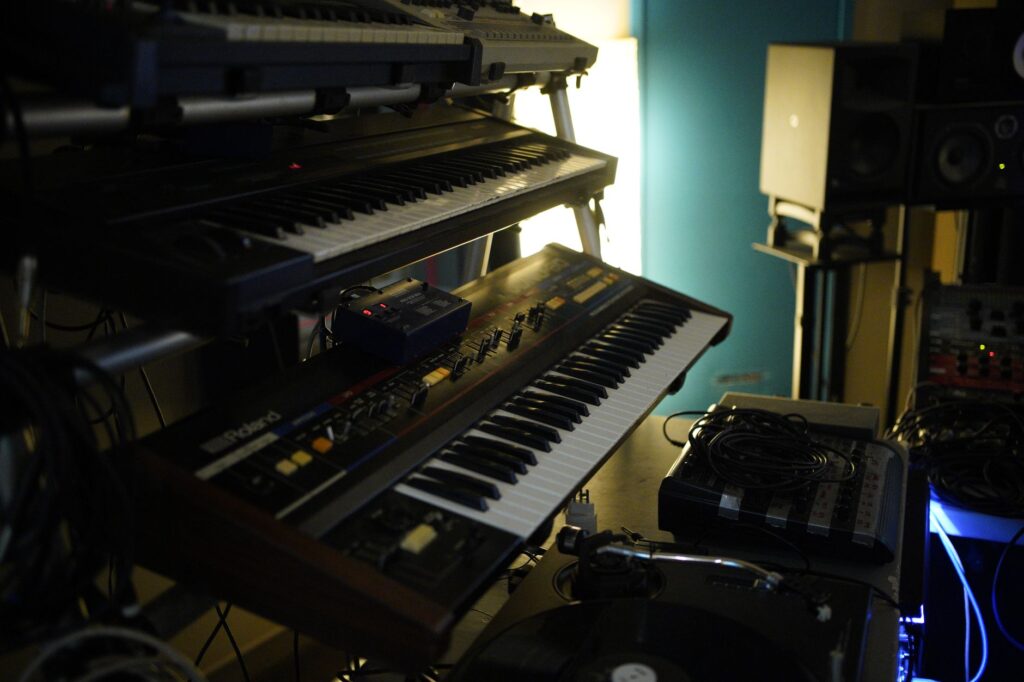
Inside the studio, a flickering CRT monitor throws a pale blue light across a desk cluttered with old gear. There is a specific warmth in the hiss of an old cassette tape, a texture that cannot be synthesized by a modern software plugin. Austin Neely, known to the electronic world as Effin, understands this silence. He knows that the space between the notes is where the soul of a track lives. While the rest of the industry chases the loudest, cleanest transient, Effin digs into the dirt of the past. He is not trying to make polite music. He is constructing an alternative reality.
In an era where bedroom producers can download the exact same sample packs and use the same digital synthesizers, electronic music has run into a wall of hyper-polished uniformity. The algorithm demands consistency, but art demands chaos. Effin has built his reputation on refusing to play by the rules of the clean digital grid. By blending heavy, aggressive bass design with dust-covered nostalgia, he creates a cinematic universe that feels both prehistoric and futuristic.
The tyranny of the clean grid
If you open any modern digital audio workstation, you are met with a terrifyingly clean canvas. Everything is perfectly in time, perfectly in key, and completely devoid of human touch. This is the modern trap. Producers spend hours polishing away the mistakes, smoothing out the rough edges until the music sounds like it was generated by an insurance company. The algorithm loves predictability, but human ears crave friction. The human brain is designed to find meaning in the unexpected, and when we remove all errors, we remove the humanity.
Effin’s work represents a violent reaction against this sterile perfection. He does not want his tracks to sound like they were made in a clinical laboratory. He wants them to sound like they were dragged out of a swamp or discovered on an old VHS tape in a deserted basement. His heavy bass lines do not just vibrate the subwoofers, they scratch against the eardrums with a tactile, physical weight. This visceral quality is why his music stands out in a saturated market. It feels alive because it is built on the imperfect, the decayed, and the human.
Resurrecting the ghosts in the machine
Sampling is often misunderstood as a shortcut, a lazy way to steal a melody. But in the hands of a master storyteller, sampling is an act of resurrection. It is a way of pulling a ghost out of the past and giving it a new body. When Effin samples, he is not just looking for a cool loop. He is looking for a feeling, a specific grain of analog noise that tells a story. Every sample carries the acoustic space of the room it was recorded in, bringing a physical history into the digital space.
He takes the discarded artifacts of old culture, vintage video game sound effects, dialogue from forgotten movies, the crackle of vinyl, and smashes them into modern, aggressive soundscapes. This creates a fascinating tension. Your brain recognizes the warmth of the old sound, but it is instantly confronted by the cold, metallic pressure of his modern synthesis. It is a dialogue between different eras. To experience this raw approach to curation, you can explore our Selection of boundary-pushing electronic art.
Sound design as architecture
To listen to an Effin track is to step inside a physical space. He does not just write songs, he designs architecture. Every snare hit is a brick, every bass growl is a concrete pillar, and the ambient noise in the background is the wind blowing through the rafters. This sense of world-building is what separates a standard club track from a piece of sonic art. It transforms music from a temporary distraction into a physical destination.
The greatest music does not just sit in your speakers, it redraws the walls of the room you are standing in.
This cinematic approach requires a deep understanding of psychoacoustics. By placing tiny, organic noises in the background, a sudden click, a breath, a distant siren, Effin tricks the listener’s brain into believing the soundscape is a real, physical environment. It is a technique borrowed from film sound design, but applied to the wildest frontiers of bass music. You can hear this meticulous attention to detail across his discography, especially on his official Effin on Soundcloud channel, where his sonic experiments live.

The rebellion of the imperfect loop
How does an artist maintain this level of raw expression in a world that demands constant, rapid content? It requires a set of strict creative rules. Effin’s process is a blueprint for any producer looking to escape the creative block of the modern studio. He prioritizes instinct over perfection, and physical texture over digital cleanliness. He reminds us that the best ideas are often found when we stop trying to control the outcome.
Here are the pillars that define his unique sonic universe:
- The search for dust: Actively seeking out low-fidelity sources, old tapes, and broken gear to find sounds that have physical character.
- Dynamic contrast: Placing ultra-clean digital synthesis directly next to dirty, low-quality samples to create maximum impact.
- Cinematic pacing: Allowing tracks to breathe, using ambient interludes and atmospheric intros to build tension before the heavy drop.
- Tactile synthesis: Designing bass sounds that feel like physical materials, like tearing metal, crushing wood, or rushing water.
This commitment to the physical reality of sound is what makes his music so highly respected among fellow producers. He reminds us that electronic music does not have to be cold and digital. It can be as dirty, warm, and human as any acoustic instrument. If you are an artist trying to break free from the algorithmic mold and want to share your raw sonic experiments, you should submit your music to our collective. We do not care about your social media metrics, we care about the depth of your sound.
Let the machines have their clean, perfect loops. We will stay here in the dirt, building worlds out of the pieces they threw away.