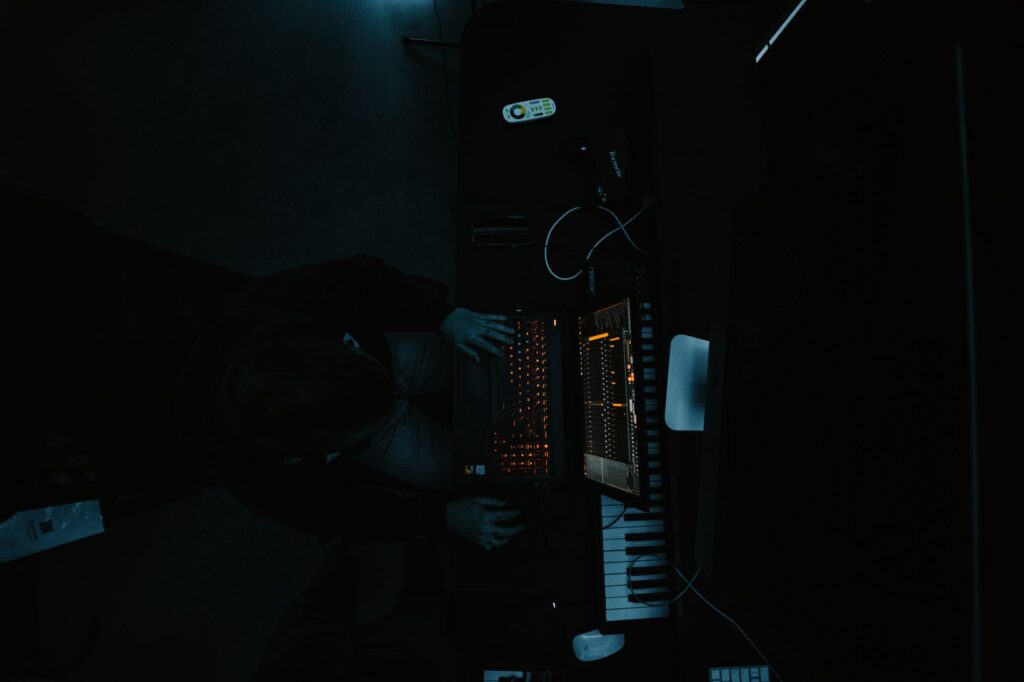
The walls of the cabin were closing in. It was 2015, and the three members of Rüfüs Du Sol, Tyrone Lindqvist, Jon George, and James Hunt, were standing on the edge of a cliff. The success of their debut album had brought them to a crossroads of creative exhaustion. The industry demanded hits. The algorithms demanded short, punchy tracks designed for transient playlists. Instead of complying, the trio retreated to a secluded cabin. They needed to find their soul again. They needed to escape the relentless pressure of expectation.
The defiance of a nine-minute jam
In that cabin, they stopped listening to the noise of the outside world. They stopped trying to write for the radio. The result of this rebellion was “Innerbloom”, a track that defied every rule of modern electronic music. Released on 20 November 2015 as the third single from their second album, Bloom (2016), the song was not built for quick consumption. It was a nine-minute journey. It was a slow, meditative exploration of sound that refused to apologize for its length.
The music industry wants you to get to the chorus in thirty seconds. Rüfüs Du Sol decided to make you wait. They built a slow, hypnotic groove that unspooled with a patient, almost spiritual intensity. Writing for the Guardian, critic Marcus Teague beautifully captured this essence, calling the song “a near-ten minute swim through woozy synths unspooling towards a perfectly weighted anthem of the interior.” It was a high-water mark for the album, a piece of music that refused to rush.
If you want to understand why this track heals, you have to look at how it was made. The band was dealing with the intense pressure of their rising careers. They were tired, lonely, and searching for meaning. By allowing themselves the space to create a nine-minute track, they saved themselves from creative burnout. They chose emotion over efficiency. You can find more of our curated deep dives in our Selection, where we honor music that rejects the template of modern algorithms.
The architecture of a secular hymn
What makes “Innerbloom” a masterpiece is its ability to make people cry and jump at the same time. This is not accidental. It is the result of absolute vulnerability. Tyrone Lindqvist, the group’s vocalist, captured this emotional weight perfectly when discussing their state of mind:
“I’m sure I’m not the first person to say this, but our favourite artists are our favourite because we’ve shared moments listening to them with friends or family that you can’t recreate, moments you remember forever. We really wanted to create those moments for other people with the songs from Bloom. ‘Innerbloom’ is probably the most personal song we’ve written in terms of where we are at as people.”
The lyrics are simple yet devastating. They speak of longing, of finding a sense of home in another person, and of the fear of losing that connection. When Lindqvist sings about dreaming of a life together, it is not a cliché. It is a raw, desperate plea. It resonates because it feels like a private journal entry whispered over a massive, swelling synthesizer. It is a confession disguised as a dance track.
As the track builds, the tension becomes almost unbearable. The bassline throbs like a heartbeat. The synths swirl, creating what Sosefina Fuamoli of the AU Review described as a “blissful electronic atmosphere.” It is a surefire hit that does not feel like one. It feels like a sanctuary. It is the sound of three people pouring their exhaustion and their hope into a single, continuous take.
The legacy of a modern classic
The world noticed. Even though a nine-minute song is a nightmare for commercial radio, “Innerbloom” carved its own path. It peaked at number 65 on the ARIA Singles Chart and was certified platinum in Australia in 2017. But charts do not tell the whole story. The true measure of its impact lies in how it embedded itself into the cultural consciousness.
In March 2020, the song was voted number 5 in Triple J’s Hottest 100 of the Decade, while the What So Not remix polled at number 64. It was also voted number 16 in the Triple J Hottest 100 of Australian Songs. The track has had a long-lasting impact on Australia’s music culture and is indisputably known as Rüfüs Du Sol’s magnum opus. At the 2017 Electronic Music Awards, the legendary Sasha remix of the track won Record of the Year, proving that its core emotional message could be reinterpreted but never diluted.
To visualize this sonic journey, the band released a music video on 26 October 2016, directed by Katzki. The video is a mesmerizing, therapeutic visual composed entirely of artistic microscope footage of different colored paints swirling together. It resembles distant landscapes and faraway galaxies, matching the song’s therapeutic, uplifting, and inspiring atmosphere. You can watch the video on the Wikipedia page for Innerbloom or visit the band’s official channels to see how they perform this live.
Why the algorithm will never understand Innerbloom
We live in an era of engineered music. Algorithms analyze beats per minute, track lengths, and lyric patterns to create songs that are mathematically optimized to keep you scrolling. They want you to consume, not to feel. “Innerbloom” is the antidote to this digital numbness.
It is a secular hymn for a generation that is deeply connected online but profoundly lonely in reality. When you are in a crowd of thousands of people, and those chords begin to swell, something magical happens. The digital noise fades. You are no longer a user on a platform, you are a human being sharing a fleeting, irreplaceable moment with strangers.
- The song represents a refusal to compromise, standing at over nine minutes long.
- It saved the band from creative burnout by prioritizing emotion over industry standards.
- It became a cultural touchstone, recognized as one of the greatest Australian songs of all time.
- It continues to unite dancefloors globally, offering a shared emotional sanctuary.
If you are an artist fighting against the system, trying to make music that matters, do not shorten your tracks to fit a playlist. Do not dilute your soul for a metric. Trust your instinct. You can submit your music to us if you are ready to share your raw truth with the world.
Let this be a reminder that music is not a data point. It is emotional urgency. It is the nine-minute jam session in a dark cabin that saves your life.