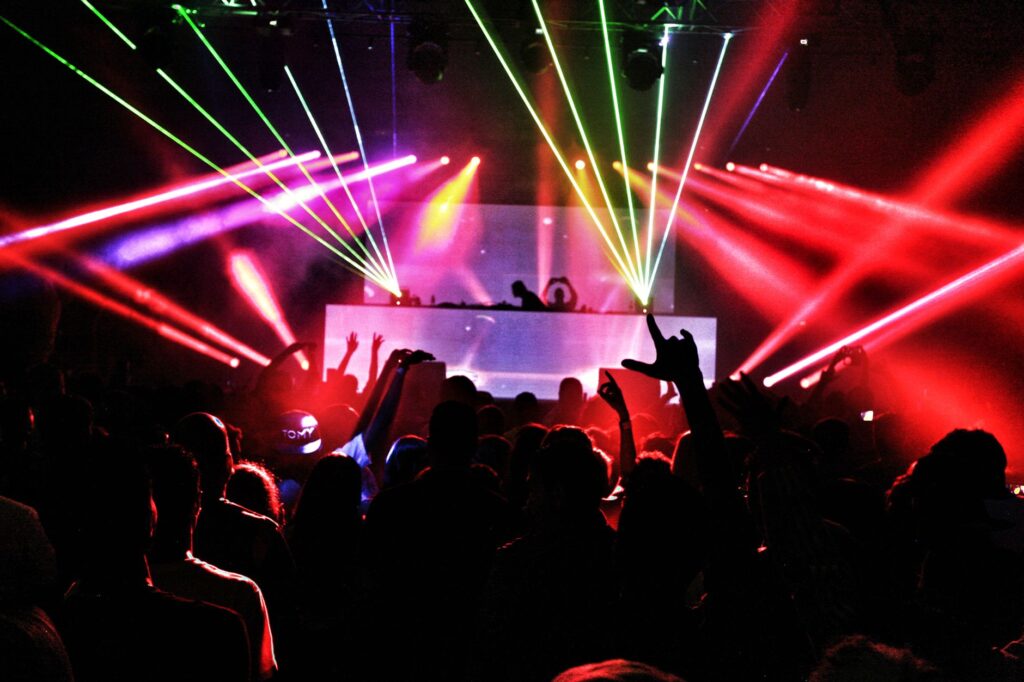
Imagine a room where the walls are sweating. It is 1998 in Berlin, inside the industrial cavern of E-Werk. There are no flashing phone screens, no VIP booths, and no influencers posing for a camera. There is only a dark room, a heavy bassline, and a crowd of strangers moving as a single organism. Then, the kick drum fades out. A clean, luminous synthesizer melody begins to climb. It does not crash or drop. It floats, lifting the entire room into a state of suspended animation. That melody is “For An Angel” by Paul van Dyk. Over twenty-five years later, that simple progression remains a monument to what electronic music used to be, and what it must become again.
Today, the dancefloor is under siege. We live in an era where music is engineered to survive a ten-second scroll on a social media feed. Tracks are no longer built to take you on a journey, they are optimized to trigger quick dopamine releases before you swipe to the next clip. But Paul van Dyk did not write “For An Angel” for an algorithm. He wrote it for the collective soul.
The birth of a timeless sanctuary
Originally released in 1994 on his debut album, *45 RPM*, “For An Angel” did not start as a global phenomenon. It was a beautiful, ambient-leaning trance track that captured the fragile optimism of post-Cold War Berlin. When Paul van Dyk reworked the track in 1998 as the E-Werk remix, he injected it with a driving energy that transformed it into a dancefloor weapon. The new version bridged the gap between raw, underground clubbing and mainstream appeal, ultimately topping dance charts worldwide.
The magic of the track lies in its restraint. In the late nineties, electronic music was evolving rapidly, yet “For An Angel” stripped away the noise to focus on a singular, pure emotion. It was not designed to shock the listener. It was designed to open them up. By combining a driving, hypnotic club beat with a melody that felt almost sacred, the track established a sanctuary where ravers could lose themselves and find each other.
The architecture of collective euphoria
To understand why this track still gives us chills after decades, we must look at the architecture of the melody itself. It is a masterclass in tension and release. The synth line is simple, almost childlike in its purity, but it carries an immense emotional weight. It does not demand your attention with aggressive distortions or complex sound design. Instead, it invites you in.
Modern electronic music often relies on the drop, a sudden explosion of noise designed to create a momentary burst of energy. “For An Angel” operates on a completely different philosophy. It builds a continuous wave of collective euphoria that slowly washes over the crowd. The melody does not crash, it glides, creating a sense of weightless flight. This is the difference between cheap thrill and lasting art. One is a product, the other is an experience.
The modern dancefloor has been sterilized by the pursuit of the perfect digital clip, but a true anthem reminds us that the best moments are the ones we cannot capture on a screen.
Defying the ten-second digital prison
We are currently witnessing the systematic destruction of the dancefloor experience. Corporate clubs have turned dance music into background noise for overpriced drinks and social media posts. Producers are forced to write music that fits into the rigid constraints of a TikTok video, resulting in predictable, formulaic tracks that disappear from memory as quickly as they arrive.
“For An Angel” is a direct defiance of this digital prison. You cannot reduce its impact to a ten-second preview. It requires patience. It requires you to stand in a dark room, next to people you do not know, and let the music take control. When we listen to this track today, we are not just feeling nostalgic for the nineties. We are defending the very idea of the real dancefloor. We are choosing sweat over screens, human connection over digital validation, and timeless art over disposable content.
The legacy of the real dancefloor
The longevity of this masterpiece proves that the human heart cannot be fooled by an algorithm. While thousands of trend-focused tracks have been forgotten, this melody remains as powerful as ever. It has survived the rise and fall of physical vinyl, the transition to digital downloads, and the current streaming era because it speaks to a fundamental human need: the desire to feel connected to something larger than ourselves.
If you are tired of the generic, formulaic loops dominating the airwaves, it is time to dig deeper. We invite you to explore our Selection of tracks that refuse to compromise on emotion. The underground is still alive, and it is waiting for those who are brave enough to step away from the screen.
Here is why “For An Angel” continues to stand as the ultimate anti-algorithmic anthem:
- It prioritizes emotional depth over aggressive, short-lived drops.
- It was built for the sweaty, dark rooms of Berlin, not the sterile feeds of social media.
- Its melody relies on timeless harmonic progression rather than temporary production trends.
- It unites generations of ravers under a shared, wordless language.
The battle for the soul of dance music is happening right now on every dancefloor in the world. We must decide if we want to be consumers of content or participants in a movement. If you are a producer creating music with raw, unfiltered emotion, we want to hear your voice. Do not write for the algorithm, write for the collective soul, and submit your music to our movement today. Let us build the future of the dancefloor together.