The air is heavy with sweat, not expensive perfume. Your phone is buried deep in your pocket, forgotten. Above you, a single strobe cuts through the dark smoke, and then, the chords begin. It is 2012. You are not standing in a VIP booth trying to look important. You are lost in a sea of thousands of strangers, all looking up, all waiting for the same collective release. This is the feeling that Sebastian Ingrosso and Alesso captured in “Calling (Lose My Mind)”. It is a feeling that the modern electronic music industry has spent a decade trying to package, monetize, and ultimately ruin.
The moment the room became one
To understand the power of this track, you have to understand the architecture of progressive house during its golden era. This was a time when producers did not write music for the skip button. They wrote music for the journey. Sebastian Ingrosso, already a titan as part of Swedish House Mafia, partnered with his young prodigy Alesso to create something timeless. The instrumental version, simply titled “Calling”, was a masterclass in tension and release. It did not rush to the point. The main synth line is a soaring, emotional hook that slowly unfurls, building layer upon layer of analog warmth.
When Ryan Tedder’s vocals were added for the vocal mix, the track became an anthem that bypassed the brain and went straight to the chest. It is a song built on a simple chord progression, but it is executed with such visceral intensity that it still gives you chills twelve years later. You can study the history of Calling (Lose My Mind) on Wikipedia to see its global chart impact, but the real data is written in the memories of those who lived it on the dancefloor.
The death of the long build
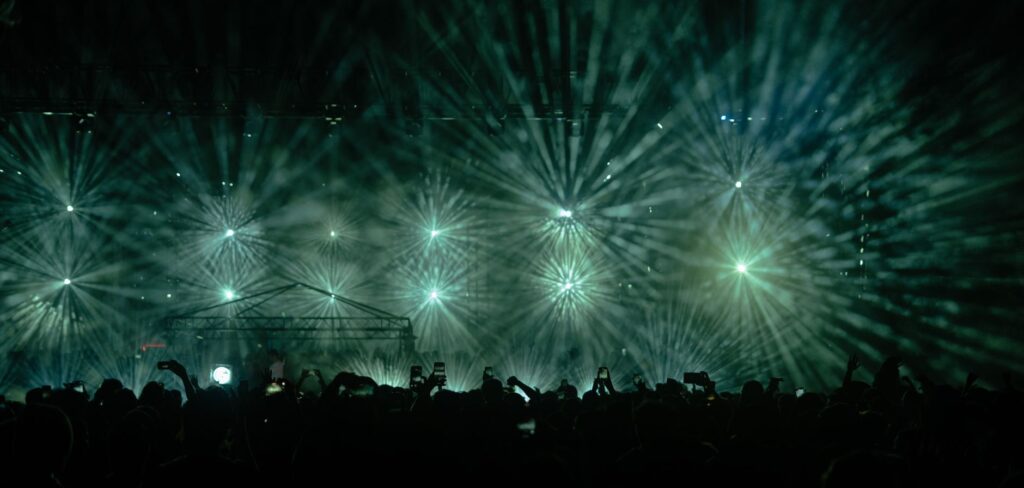
Photo: Sami Abdullah / Pexels
Today, the music industry is obsessed with efficiency. The algorithm demands that a track catch your attention within the first five seconds, or it will be skipped. Tracks are getting shorter, often clocking in at under two minutes, with no intro, no outro, and no space to breathe. They are designed to survive the scroll of a social media feed, not the sweat of a three-hour set. This is a tragedy for dance culture. When you eliminate the build-up, you eliminate the payoff. “Calling” is the exact opposite of this modern, hyper-efficient approach. It is a track that understands the value of patience. The intro builds slowly, letting the kick drum establish a physical connection with your heartbeat. By the time the main melody introduces itself, you have already invested your time and energy. You have earned the drop.
We traded the transcendent communal scream of ten thousand people for the solitary validation of a screen.
This trade-off is destroying the soul of our nightlife. Modern venues have become backdrops for social media content. The DJ is no longer a shaman leading a collective trip; they are a visual asset in a marketing campaign. We must look back at tracks like “Calling” to remind ourselves of what we are actually fighting for. If you look at our curated list of tracks in our Selection, you will see that we consistently champion music that values this emotional weight over social media metrics.
The anatomy of collective euphoria
The magic of “Calling” lies in its ability to create a singular moment of unity. When that main lead synth opens up, it does not matter who you are, where you came from, or what your bank account looks like. The VIP tables disappear. The bottle service sparklers fade into insignificance. You are part of a temporary tribe, united by a frequency. This is not something that can be simulated by a playlist algorithm. It requires human curation, analog soul, and a willingness to surrender to the music.
Why does this track still resonate so deeply after more than a decade? Here is what makes it a masterpiece:
- The patience of the arrangement: It allows the emotion to build naturally rather than forcing a quick reaction.
- The warmth of the production: The synths feel alive, heavy, and physical, vibrating through your entire body.
- The vulnerability of the vocal: Ryan Tedder’s performance captures a raw, desperate need for connection.
- The rejection of cynicism: It is a track that is unapologetically sincere, free from the ironic detachment of modern trend-chasing.

Photo: Barthy Bonhomme / Pexels
Reclaiming the sweat
We need to reclaim the dancefloor from the hands of the curators who only care about engagement rates and brand activations. We need to support artists who are still willing to write anthems that aim for the heavens. The era of the ten-second loop is a prison, and the key to escaping it is already in our history. Listen to the official channels of Alesso’s official channels or go back to the classic sets of Sebastian Ingrosso. The blueprints for our liberation are already written in those old wave files.
If you are a producer who is tired of making background music for TikTok reels, if you are making music that still believes in the power of a real, physical dancefloor, we want to hear from you. We invite you to submit your music to our collective. Let us build the next era of dance music together, free from the tyranny of the algorithm. Let the sweat return to the club. Let the phones go dark. It is time to lose our minds all over again.