The air in the coastal beach house was heavy, thick with a silence that no synthesizer could drown out. Outside, the Australian sun beat down on the Pacific, a blinding beauty that seemed completely detached from the quiet fracture happening indoors. It was early 2012. Axwell, Steve Angello, and Sebastian Ingrosso, the three minds who had conquered global dance music as Swedish House Mafia, were standing on the edge of a cliff. They were at the absolute peak of their cultural power, yet they were secretly falling apart. The brotherhood was splintering under the weight of ego, exhaustion, and the relentless machinery of fame. They needed an escape, and they found it in the raw beauty of the Australian landscape. But more than that, they needed a mirror. They needed a song that could hold the weight of their impending goodbye.
This was not a track engineered by a corporate committee to satisfy a streaming platform. It was a therapeutic, bittersweet farewell letter to their youth and to each other. When they announced the track during the Future Music Festival in 2012, the world had no idea that this anthem of reassurance was actually a eulogy for the group itself. It was a song born from the friction of three friends who knew they had to let go of the very thing they had built together.

A demo born from a broken home in Stockholm
To understand how this monumental farewell came to be, we have to travel back to a tiny studio in Stockholm in May 2010. Long before the stadium lights and the global charts, songwriters John Martin and Michel Zitron sat down to write. They were not thinking about festival main stages. Instead, they were looking backward, digging into the painful soil of their own pasts. Zitron began to open up about his upbringing in a broken home in Stockholm, speaking candidly about his parents’ painful divorce.
As the memories flowed, Zitron recalled the words of reassurance his father had given him during those dark days. Those exact words became the chorus of the song, taken verbatim from a father trying to shield his son from the collapse of his world. The pre-chorus followed naturally, born from the songwriters’ shared memories of young love and the sting of their first heartbreaks on a hill across a blue lake. They recorded a raw demo, originally intending to use it for their own electro-pop indie project. But destiny, as it often does in electronic music, had other plans. In December 2010, Zitron sent a batch of demos to Sebastian Ingrosso. Among those files was a rough vocal that would change everything.
The couch in Los Angeles where giants cried
The turning point arrived in January 2011 inside a recording studio in Los Angeles. Ingrosso was working with Axwell and Steve Angello when he remembered the demos Zitron had sent him. He phoned the songwriters, asking them to resend those specific tracks. What happened next is a moment of pure, unvarnished human emotion that defines the soul of electronic music.
After listening to the demo of “Don’t you worry child”, Ingrosso called Zitron back in a state of shock. He told him that Axwell was lying on the studio couch, almost crying, completely overwhelmed by the raw emotional weight of the vocal. They knew instantly that they had to have this song. It was the missing piece of their collective soul.
The song was never just a club record; it was an emotional exorcism that forced three grown men to confront their own vulnerability.
However, the path from that emotional breakthrough to the finished master was anything but smooth. The supergroup embarked on a long, grueling production process that stretched their relationships to the breaking point. As documented in their raw 2014 documentary, Leave the World Behind, the creation of this anthem became a pressure cooker that revealed deep personal tensions. They were trying to produce a global hit while simultaneously watching their friendship disintegrate. Every snare hit, every synth layer, and every vocal edit was charged with the unspoken knowledge that this would be their final act together.
Why the world still dances to a tragedy
When “Don’t you worry child” was finally released on August 10, 2012, after its radio debut on Pete Tong’s BBC Radio 1 show, it did not just climb the charts: it exploded. It became Swedish House Mafia’s biggest hit, reaching number six on the Billboard Hot 100 in the United States and debuting at number one in the United Kingdom. It sold millions of copies worldwide and earned a prestigious Grammy nomination. But these statistics are meaningless compared to the emotional reality of what the song achieved.
The genius of the track lies in its profound musical duality. Written in the key of D major at a driving tempo of 128 beats per minute, the song is a masterclass in progressive house tension and release. D major is traditionally a key of triumph, light, and celebration. Yet, the lyrics are drenched in heartbreak, divorce, and the loss of childhood innocence. This deliberate contrast is the exact reason why the track makes millions of people cry and jump at the same exact time. It forces the listener to hold two opposing truths at once: that life is full of devastating pain, but everything is going to be alright.
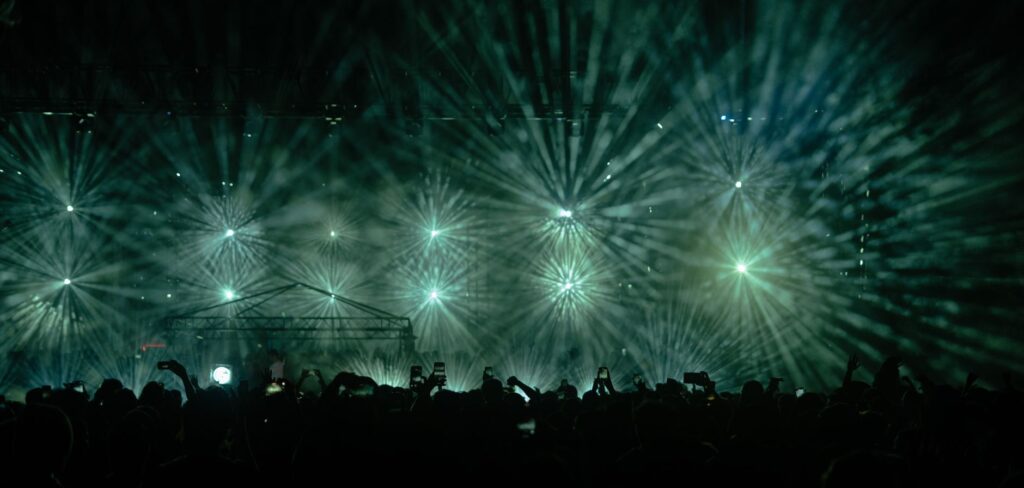
The song became the emotional centerpiece of their One Last Tour, a massive global journey that culminated in an emotional final performance in Miami where the trio parted ways for five years. On that stage, under the flashing lights, “Don’t you worry child” was no longer just a song. It was a shared prayer between three fractured brothers and the millions of fans who had walked the path with them. It proved that electronic music is not a cold, calculated product of an algorithm. It is an urgent, visceral cry of human connection.
If you are an artist pouring your own trauma into your music, do not let the cold metrics of the industry quiet your voice. We want to hear the raw truth behind your sounds. You can read more about our philosophy in our selection of groundbreaking tracks, or you can submit your music to share your own story with our movement. For more details on the song’s historic run, you can check out the official Wikipedia page for the track.