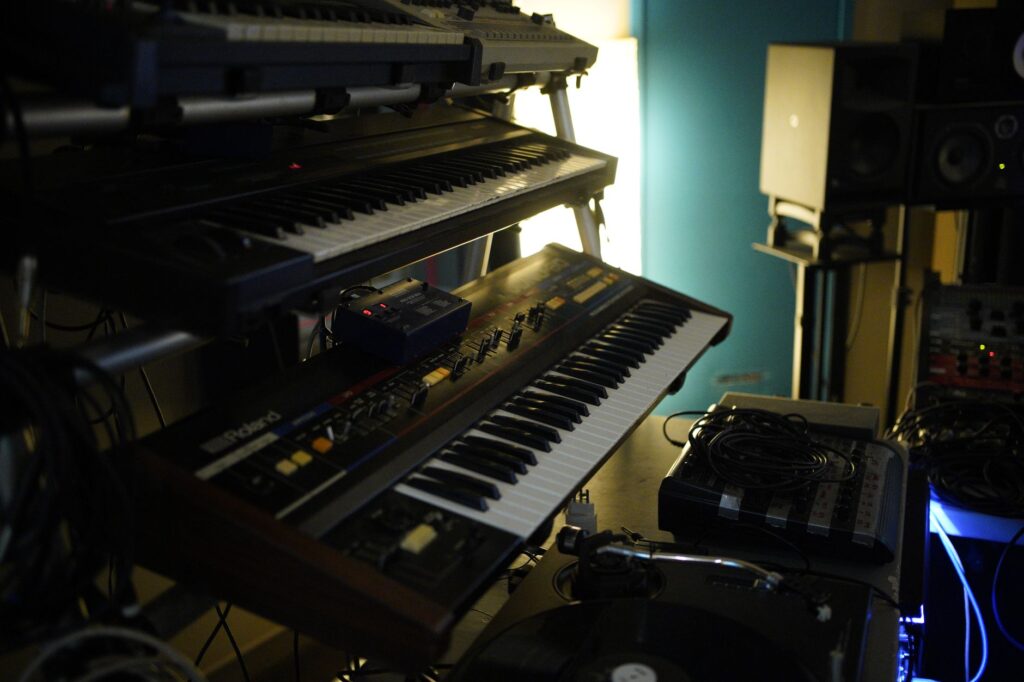
It is 4am in a dimly lit studio in Paris, 1998. The air is thick with smoke, the hum of analog gear, and the warmth of a completed master tape. Thomas Bangalter and Guy-Manuel de Homem-Christo look at each other. They have just finished a track that feels like a chemical reaction, a burst of absolute euphoria. Yet, instead of rushing it to the pressing plants, they place it on a shelf. It will sit there, silent and secret, for two long years. When “One More Time” was finally released in November 2000 by Virgin Records as the lead single from their second studio album, Discovery (2001), it changed the landscape of electronic music forever. But behind the glittering lights and the animated magic of the 2003 anime film Interstella 5555: The 5tory of the 5ecret 5tar 5ystem, there lies a deeply emotional, bittersweet human story.
The voice from New Jersey
The soul of “One More Time” was born from a genuine human connection, not a corporate marketing plan. Thomas Bangalter and Guy-Manuel de Homem-Christo had long been inspired by the legendary house music singer and producer Romanthony. They even paid tribute to him in their track “Teachers” on their debut album, Homework. In 1996, they finally met him at the Winter Music Conference, where they became close friends. They wanted to collaborate immediately, but because the French duo was still relatively unknown, it was initially difficult to convince him to record. Despite these early challenges, Romanthony was enthusiastic about their raw talent. He even released the single “Hold On” on Bangalter’s own label, Roulé, before “One More Time” ever saw the light of day. When they finally brought him into the studio, they knew they had found the emotional anchor of their new sound.
The autotuned cry against mortality
When the track was finally revealed, it split the music world in two because of its radical vocal processing. Daft Punk took Romanthony’s soulful, raw performance and ran it through heavy auto-tune and audio filters. Critics were initially furious, calling the effect cold, synthetic, and cheap. But Thomas Bangalter defended the artistic choice, comparing the backlash to the late 1970s when French musicians tried to ban synthesizers. He argued that auto-tune was simply another tool, like the electric guitar was to the bands of the 1960s. Creation, for them, was about deep interaction, and they preferred intense love or hate over neutral indifference. Romanthony loved the effect and wanted to innovate, refusing to be bound by traditional rules of soul music.
Beneath the euphoric, heavily compressed house loops lies a bittersweet truth. One More Time is not just a party song, it is a desperate, beautiful plea to celebrate life in the face of inevitable mortality. The track features a legendary two-minute breakdown where the beats vanish, leaving only the filtered vocal and a soaring synth. Bangalter explained that the break is so long that the song itself becomes the breakdown. It forces the dancer to stand in a moment of suspended animation, realizing that the joy of the present is precious precisely because it is fleeting.
“Creation is interaction. The healthy thing is that people either loved it or hated it. At least people were not neutral.”
The hidden cost of the sample
While the track conquered global charts, reaching number one in France, number two in the UK, and number 61 on the US Billboard Hot 100, a darker human reality remained hidden. The infectious horn loop that drives the track was sampled from an obscure 1978 disco song called “More Spell on You” by Eddie Johns. Daft Punk rearranged the horn section to create their iconic hook, but Eddie Johns did not receive credit on the release. By 2021, Johns was living in assisted housing in Los Angeles following a stroke that left him unable to work, having previously spent over a decade homeless. While Daft Punk paid royalties to the owner of the sample, the French record label and publisher GM Musipro, the money never reached Johns himself. It is a sobering reminder of the structural cracks in the music industry, where the original creators of the groove are sometimes left behind while their sounds conquer global dancefloors.
Why we still dance to it
Despite the controversies, “One More Time” became an immortal anthem that defined a generation. It is not a product of a sterile, predictive algorithm, it is a raw, emotional human statement. When we dance to this track, we are participating in a visceral ritual of joy and grief. If you want to discover more raw electronic masterpieces, explore our curated selection of timeless tracks. If you are an artist making music with this level of emotional urgency, you can submit your music to our movement today.
To understand the full history of this masterpiece, you can read more about its impact on the Wikipedia page for One More Time. Ultimately, the track reminds us that music is not content to be scrolled past, it is a vital, urgent expression of our shared humanity. Stop letting algorithms feed you passive sounds. Go find the tracks that make you feel alive, and play them one more time.
- Voted the greatest dance record of all time by Mixmag readers
- Named one of the greatest songs of the decade by Pitchfork
- Included in Rolling Stone’s list of the 500 greatest songs of all time
- Voted one of the best songs of the year in the Pazz & Jop critics’ poll