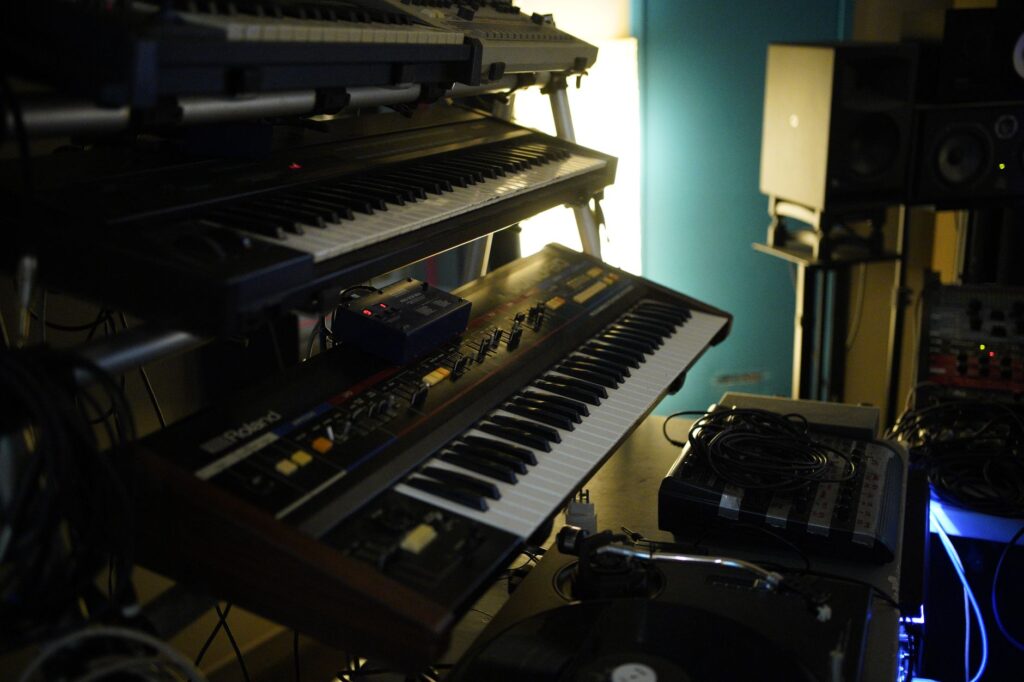
Late at night in 1998, inside a dimly lit Brighton studio, Norman Cook sat alone before a wall of vintage hardware. The blue screen of an Atari ST flickered softly alongside a rack of Akai S950 samplers. Cook, known to the world as Fatboy Slim, was searching for something that could anchor his second studio album. He reached for a crate of obscure vinyl and pulled out a 1975 record by civil rights activist Camille Yarbrough. When the needle hit the groove of her song, Take Yo’ Praise, her warm, unprotected voice drifted through the room. It was an invitation to slow down, to acknowledge another human soul in a cold world.
Cook did not build a standard dance track that night. Instead, he grabbed nine distinct audio fragments from completely unrelated worlds and stitched them together into a chaotic, joyous prayer. Released on 4 January 1999 as the third single from You’ve Come a Long Way, Baby, Praise You eventually climbed to number one in the United Kingdom and Iceland, while breaching the top 40 in the United States. Yet behind its playful, infectious big beat rhythm lay a profound confession of gratitude that continues to touch dance floors twenty-five years later.
A mosaic of nine stolen fragments
The technical architecture of Praise You is a testament to the lost art of physical sampling. Long before software algorithms automated key-matching, Cook programmed his Studio Electronics SE-1 and Roland TB-303 synthesizers to build a bridge across musical genres. The foundational piano loop was lifted from an obscure 1973 JBL test record titled Sessions, recorded during a studio run for country singer Hoyt Axton. Cook paired that delicate piano line with drum breaks from Rare Earth, Isaac Hayes, and Ruby, creating an unstable, organic groove that felt instantly alive.
The complete list of sampled elements forms an eccentric library of sound:
- Lead vocal from Camille Yarbrough’s Take Yo’ Praise (1975)
- Piano sample from JBL test album track Balance and Rehearsal (1973)
- Guitar riff from Mickey Mouse Disco on Disneyland Records
- Cartoon theme snippet from Fat Albert and the Cosby Kids
- Electric piano riff from Lucky Man by Steve Miller Band
- Guitar swell from You Should Be High Love by Billy Squier
- Drum grooves from Rare Earth, Isaac Hayes, and Ruby
What made the track immortal was not just the clever collage, but the deep respect Cook showed to the lead vocal. In a 2021 interview with WhoSampled, Camille Yarbrough shared her admiration for the song, stating that Cook preserved the core message and true essence of her original civil rights era piece. He did not commodify her soul; he amplified her message to a new generation of ravers desperately seeking connection.

The ultimate anti-algorithm music video
The visual identity of Praise You matched its rogue studio origin. Director Spike Jonze had previously sent Cook a videotape of himself dancing alone as a gift after a scheduled video shoot for another track fell through. Cook loved Jonze’s raw energy so much that he green-lighted a new project on a total budget of just $800. Adopted under the alter ego Richard Koufey, Jonze assembled the fictional Torrance Community Dance Group and headed to Westwood, Los Angeles.
Dance music was never meant to be polished perfection; it was born from real people making noise in dark rooms.
Without securing municipal permits, the troupe staged a guerrilla flash mob outside the Fox Bruin Theater. Passersby stared in absolute confusion as the group performed wildly awkward, emotional choreography to a portable boombox. At one point, a frustrated theater employee walked out and shut off their stereo, but the performance continued. Cook himself can be spotted in the background crowd, casually watching the chaos unfold. The video went on to win three major awards at the 1999 MTV Video Music Awards and was later voted the number one music video of all time in a 2001 MTV milestone poll, proving that authentic human awkwardness will always triumph over staged corporate grandeur.
Why this track makes us cry and jump at the same time
The magic of this anthem lies in its emotional paradox. Dance music in the late nineties was moving rapidly toward hyper-produced mainstage anthems. Cook countered that trend by delivering something fragile. The opening lines, spoken with quiet sincerity, force a crowd of thousands to drop their guards. You feel the weight of solitude in the verse, only for the beat to explode into collective release when the chorus hits. It makes people cry because it addresses human vulnerability; it makes people jump because it offers collective redemption.
When you explore our curated selection of dance music history, you realize that tracks like this survive because they were forged in moments of genuine artistic necessity. It was not calculated for a streaming playlist or designed to fit a short-form video trend. It was built by a lonely musician in a studio manipulating samplers until a forgotten voice made his heart skip a beat. You can read more about the single’s full release history on the Wikipedia record of Praise You.
Music as emotional urgency
Electronic dance music is not an aesthetic commodity to be consumed in passive streams. It is an emotional emergency, a living thread that links a 1975 civil rights recording in New York to a 1998 bedroom studio in Brighton and a 1999 crowd singing under strobe lights. When the noise of the modern content machine feels overwhelming, we return to records like this to remember why we fell in love with the night in the first place.
If you are a creator building music with that same raw, uncompromising honesty, we want to hear your voice. Step away from the formula and submit your music directly to our movement today. Keep the spirit alive, respect the roots, and never let the algorithm edit your soul.