The highway is pitch black. It is five in the morning in northern Italy, 1994. The bass is still ringing in your ears, a relentless, pounding echo of the warehouse rave you just left. Your eyes are heavy. The road ahead blurs. This was the terrifying reality for thousands of young Italians during the early 1990s. They called it the Saturday night slaughter, or strage del sabato sera. Clubbers would dance for ten hours, consume alcohol or drugs, and then drive across the country overnight. By mid-1996, an estimated 2,000 young people had died in these weekend car crashes since the start of the decade. The culture was eating itself alive. Parents were grieving, authorities were panicked, and the music was being blamed for the carnage.
In the middle of this crisis stood Roberto Concina, a young Italian DJ and composer known to the world as Robert Miles. He did not want to make people dance faster. He wanted to keep them alive. He locked himself in a modest studio with a recording budget of just 150 pounds. He did not have an algorithm telling him what would get clicks. He only had a visceral need to heal. His weapon of choice was not a harder kick drum, but a gentle, cascading piano melody. He created a shield.

The silent tragedy of the Saturday night slaughter
To understand the emotional weight of “Children”, you must understand the social pressure of Italian youth culture in the early 1990s. Rave culture had exploded. Nightclubs were temples, but they were also zones of exhaustion. When the lights came up, thousands of ecstatic ravers poured onto dangerous, winding roads. Many fell asleep at the wheel. The weekly toll of deaths was a national tragedy. Robert Miles saw this devastation firsthand. As a working DJ, he watched his dancefloors fill with life, only to know that some of those faces would never return the following week.
He realized that the high-energy, repetitive tracks played at the end of the night left clubbers in a state of dangerous hyper-arousal. They drove the way they danced: fast, aggressive, and disconnected from reality. Miles decided to change the ritual. He wanted to create a track specifically designed to end his DJ sets, a sonic sedative to calm the nervous system before clubbers turned their car keys. The authorities and the parents of car crash victims eventually met this radical shift with immense relief and approval. It was a rare moment where electronic dance music acted as a literal public health intervention.
“Children was not designed to make people jump. It was designed to bring them safely back to earth.”
A humanitarian mission and a 150 pound masterpiece
The road safety crisis was only one half of the story. The emotional core of “Children” was also forged in the fires of geopolitical tragedy. Robert Miles’s father had recently returned from a humanitarian mission in the former Yugoslavia. He brought back haunting photographs of child war victims from the Bosnian conflict. Miles stared at those pictures, looking into the eyes of innocent children caught in the machinery of violence. The grief was overwhelming. He wanted to write something that spoke to that innocence, a piece of music that could offer a temporary sanctuary from the cruelty of the world.
He recorded the track for a mere 150 pounds. It was a raw, independent production born from pure emotional urgency. There were no focus groups, no label executives demanding a radio hit, and no streaming metrics to satisfy. It was just a man, a synthesizer, and a profound sense of empathy. When you look at the track’s history on the Wikipedia page for Children, you realize how close this masterpiece came to remaining in complete obscurity. It was first released in Italy in January 1995 as part of the EP Soundtracks on Joe T. Vannelli’s DBX label. It did not chart. It was a ghost in the machine, waiting for the right moment to be discovered.
The piano riff that changed electronic music forever
The turning point arrived when Joe T. Vannelli brought the vinyl to a nightclub in Miami. There, Simon Berry of Platipus Records heard the instrumental. Recognizing its transcendent power, Berry worked with Vannelli and James Barton, the co-founder of Liverpool’s legendary Cream nightclub, to orchestrate a global release in November 1995. It became the lead single for Miles’s debut album, Dreamland, released in 1996. The track exploded across the globe, reaching number one in more than 12 countries and becoming Europe’s most successful single of 1996. Decades later, in 2025, Billboard magazine ranked “Children” among the 100 best dance songs of all time.
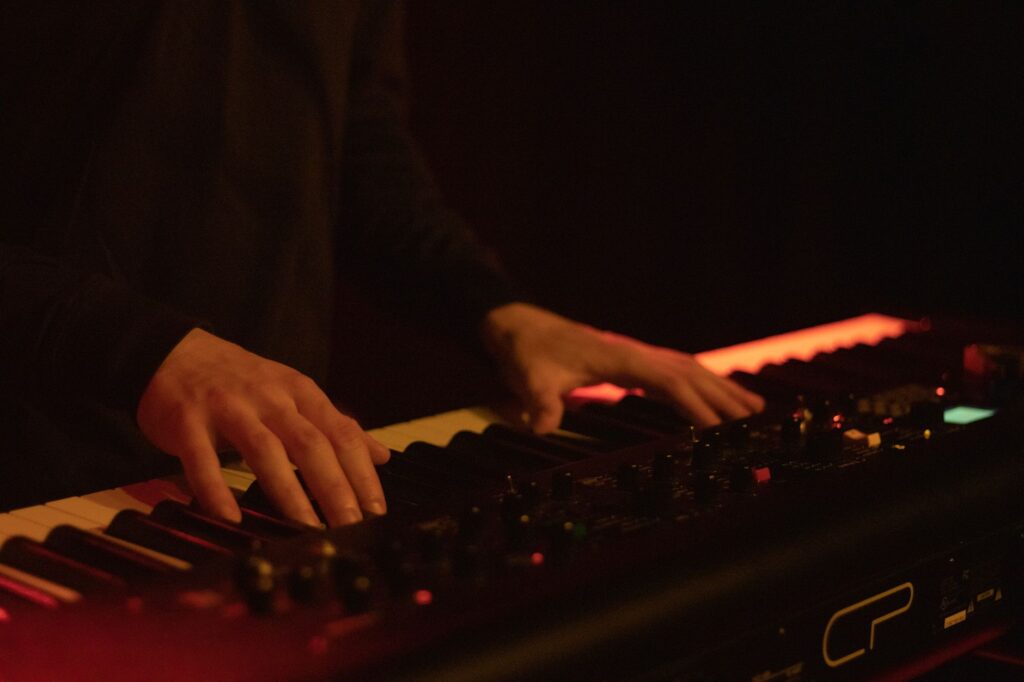
What made the track so universally powerful was its iconic, dream-like piano melody. Interestingly, this piano riff was not present in the track’s original version. It was added later, transforming a simple club record into an accessible masterpiece that bridged the gap between underground ravers and casual radio listeners. Critics showered the track with praise. AllMusic editor Jose F. Promis described the track as magical, while Billboard’s Larry Flick noted how Miles wisely took his time unraveling his melody, letting it breathe over an urgent beat. It was the birth of dream trance, a genre characterized by these beautiful acoustic piano leads layered over a steady, hypnotic four on the floor bass drum.
The sonic architecture of the track was intentionally designed with three distinct layers of healing:
- A steady, slow, and hypnotic four on the floor bass drum to ground the nervous system.
- A cascading, acoustic piano melody that offered emotional sanctuary and comfort.
- A lush backdrop of warm, atmospheric synthesizers that blanketed the listener in safety.
There was also controversy surrounding the melody. Critic Boris Barabanov later claimed a similarity between “Children” and Russian singer Garik Sukachov’s song “Napoi menia vodoi”. Sukachov claimed he gave his consent for the melody to be used, though doubts about that claim remain. Regardless of the legal mysteries, the emotional impact of Miles’s arrangement was entirely unique. He had taken the raw energy of the rave and infused it with classical beauty, creating a sonic space where grief and joy could coexist.
Why we still need the dream
Why does “Children” still make us cry and jump at the same time? It is because the track is built on a fundamental emotional paradox. The steady, driving bass drum represents the biological rhythm of the heart, the forward momentum of life, and the collective energy of the dancefloor. But the piano melody is fragile, nostalgic, and deeply human. It reminds us of our vulnerability. It is the sound of innocence trying to survive in a chaotic world. When those two elements combine, it creates a feeling of absolute release. You are moving, but you are also feeling. You are ecstatic, but you are also safe.
In today’s hyper-optimized music landscape, where algorithms dictate tempos and playlist curators demand instant, forgettable hooks, “Children” stands as a monument to what electronic music should be. It was not built to trend on social media. It was built to save lives. It was born from tragedy, financed with pennies, and fueled by empathy. If you want to discover more timeless stories and dive deep into the soul of electronic music, explore our Selection of essential masterpieces. Or, if you are a creator building something with true emotional weight, you can submit your music to our collective. Never let the algorithm steal your soul. Music is not data. It is an emotional emergency.