The clock in the studio does not care about your artistic breakthrough. It only ticks. In late 2012, German producer Zedd was staring at a deadline that threatened to swallow his debut album whole. The track that would eventually define a generation of festival-goers, “Clarity”, was on the verge of being deleted. It was an instrumental without a soul, a collection of beautiful chords searching for a voice. The industry pressure was suffocating, and the young artist was fighting a quiet, overwhelming anxiety behind closed doors.
The song began far from the sterile pressure of the commercial studio. It was born on the road, during the Poseidon tour, where Zedd and American producer Porter Robinson huddled over laptops in moving buses and temporary green rooms. Together, they carved out the emotional chord progression that would eventually shake mainstages worldwide. But when the tour ended, the collaboration fractured. Zedd was left to finish the instrumental alone, struggling to find the human element that would make the music bleed.
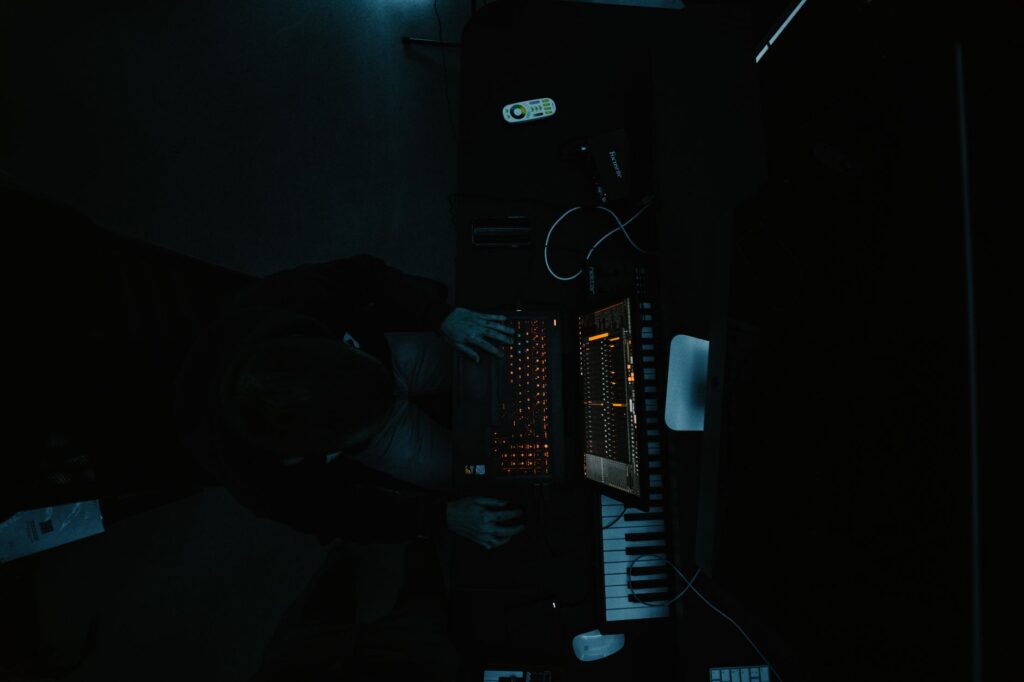
Chords carved from a brotherhood under pressure
The Poseidon tour was supposed to be a victory lap, a celebration of two rising stars of the progressive house boom. Instead, it became a pressure cooker. Zedd and Porter Robinson were young, incredibly talented, and carrying the weight of an entire industry’s expectations on their shoulders. Between tour dates, they huddled over laptops, trading files and ideas. The chords they wrote together were massive, but they carried a melancholy undertone, a reflection of the isolation of life on the road. When the tour ended, the reality of the studio set in. Zedd was left alone with the project, trying to mold those chords into a hit while the label’s deadlines loomed like a shadow.
The search for the human element was a descent into frustration. The vocal melody already existed, written by American songwriter Matthew Koma. Koma had originally penned the top-line for another of Zedd’s tracks, “Lost at Sea”. But Zedd realized that the emotional weight of Koma’s writing was too immense for that particular instrumental. It needed space to breathe. When Zedd laid Koma’s melody over the unfinished “Clarity” instrumental, something clicked, but it also fractured the collaboration. He sent the rough demo to Robinson, hoping his friend would share his excitement. Robinson did not. He found the combination jarring and told Zedd to finish the song alone. It was a devastating blow, a moment of artistic isolation that almost killed the song entirely.
The desperate rescue of a mainstage anthem
Suddenly, Zedd was isolated. He auditioned singer after singer, but none could capture the fragile desperation the song demanded. The clock was ticking down to the final days before the album deadline. Out of options and thoroughly defeated, Zedd seriously considered pulling “Clarity” from the tracklist entirely. It was a song destined for the hard drive graveyard. Then came a fifteen-minute Skype call that changed dance music history.
With only days remaining before the delivery date, Zedd’s manager played him a track by an obscure English singer named Foxes. Her voice had the exact quality he had been hunting for: a bruised, soaring vulnerability that felt like it was constantly on the verge of breaking. After a brief Skype conversation, she agreed to record the vocals. But the path to the final master was already paved with ghosts. The American singer Skylar Grey had already recorded her own vocals for the track, earning her a co-writing credit, but her version was shelved. The actual recording of Foxes’ vocals was handled by the English musician Jonny Harris, credited under his moniker Ghostwriter. The track was a patchwork of desperate choices, assembled under extreme industry pressure.
When “Clarity” was finally released on 14 November 2012, it did not sound like a clinical studio product. It sounded like a scream for help disguised as a celebration. The track immediately began its slow, unstoppable climb, eventually becoming the first top-10 hit on the US Billboard Hot 100 for both Zedd and Foxes, and earning a Grammy Award for Best Dance Recording in 2014. But commercial success is a cheap metric for the emotional weight this song carries.

The anatomy of a beautiful wreck
At its core, “Clarity” is written in the key of A♭ major at a relentless 128 beats per minute. On paper, it has all the hallmarks of early 2010s progressive house and dance-pop. But as music critics quickly noted, the song defies the standard formula of the era. The synths are described as searching, playing underneath Foxes’ love-pained vocals. The magic of the track lies in its structural tension. The lyrics reflect what critics called the immediacy and desperation of adolescent relationships. It is a brutal portrait of codependency: two people who destroy each other but cannot bear to walk away. The drop does not hit you with a barrage of noise. Instead, it cascades like a waterfall, a flood of notes that mirrors the emotional release of finally giving in to a toxic cycle.
“Clarity” is not a song about love: it is a song about the terrifying relief of letting yourself drown with someone else.
This is why the track makes crowds cry and jump simultaneously. The production mimics the euphoric rush of adrenaline, while the lyrics describe a slow-motion car crash. It is the exact feeling of knowing you are making a mistake, but running into the fire anyway. Why does this track make us jump and cry at the same time? The answer lies in the key of A♭ major. In classical music theory, this key is often associated with death, grave solemnity, and eternity. It is a key that naturally carries a heavy, emotional resonance. When you combine that tonality with a tempo of 128 beats per minute, the standard heartbeat of progressive house, you create a physiological paradox. Your body wants to move, to celebrate, to release energy. But your heart is reacting to the solemnity of the key and the raw pain of the lyrics. It is a physical manifestation of trying to run away from your own feelings.
Why we dance to our own destruction
In January 2013, Zedd and Foxes performed an orchestral version of the song on Late Night with David Letterman. Stripped of the mainstage synths, the song’s true skeleton was revealed. It was a melancholy ballad about survival. The music video, directed by Jodeb, captured this perfectly, depicting two lovers colliding head-on in a desert, only to rewind and repeat the collision over and over. We live in an era where electronic music is often optimized for passive listening, designed by algorithms to keep our heart rates flat. “Clarity” remains a monument to the opposite philosophy. It is a testament to the chaotic, messy, and urgent nature of human connection. It reminds us that the best dance music is not designed to be comfortable. It is designed to hurt.
If you want to understand why this movement matters, you must look past the charts and the gold plaques. You must look at the moments where the lights fade and the crowd is left with nothing but their own raw emotion. We invite you to explore our Selection of tracks that refuse to play it safe. And if you are an artist making music that bleeds, do not let the algorithms silence you: submit your music to our collective today.
To read more about the history of progressive house, check out the official Clarity on Wikipedia page.