The room is pitch black. Your phone is in your pocket, screen dark, forgotten. The crowd does not move because they are waiting. They are waiting because they trust the journey. This is the opening act of a ten-minute ritual. In 2009, Joel Zimmerman, known to the world as Deadmau5, released a track that would become the definitive monument of progressive house. That track was Strobe. It did not ask for your attention: it demanded your devotion. It did not try to fit into a radio edit: it created its own universe. Today, as we drown in a sea of hyper-compressed, algorithmic noise, this masterpiece stands as a towering lighthouse of artistic patience.
We live in an era of instant gratification. The modern club scene has largely become a background for social media content. Tracks are engineered to hook you in the first five seconds, delivering cheap dopamine hits before transitioning to the next generic loop. But some tracks refuse to play by these rules. To truly understand why this piece of music still saves us, we must look at how it defies the very structure of the modern music industry.

The architecture of silence and patience
The genius of Strobe lies in its willingness to be quiet. For the first three minutes, there is no beat. There is only a fragile, ambient melody that floats through the dark like a solitary signal in deep space. In a world terrified of silence, starting a dance track with three minutes of ambient synthesis is a radical act of rebellion. You can read about the technical details on the Wikipedia page for Strobe, but the emotional truth is simple: the track makes you wait. It forces you to breathe.
This slow introduction is not filler. It is the foundation of the entire emotional payoff. By the time the soft, filtering analog synthesizer pluck begins to emerge, your nervous system has settled. You are no longer scanning your surroundings or thinking about your phone. You are locked in. The track builds with an agonizing, beautiful precision. Each layer is added with absolute purpose, proving that true euphoria cannot be rushed, packaged, or condensed for a social media feed.
The slow burn that the system fears
The modern music industry is terrified of the slow burn. The streaming platforms want you to skip, click, and consume. They want tracks to be short so you can play more of them, generating micro-cents of revenue with every hurried transition. Strobe is the ultimate antidote to this commercial disease. It is a ten-minute journey that requires your presence. You cannot multi-task while listening to Strobe: it occupies too much emotional space.
True euphoria cannot be automated, packaged, or condensed into a social media reel. It must be earned through time, sweat, and collective patience on the dancefloor.
Defying the ten-second digital prison
Modern clubs have largely traded sweat for screens. The dancefloor, once a sacred space of collective anonymity and primal connection, has been colonized by the front-facing camera. We watch DJs perform behind barriers of smartphones, waiting for the visual drop that will look good on a screen. But Strobe cannot be captured in a ten-second video. If you try to film it, you miss the point entirely. The magic of this track is not in the peak: it is in the transition.
When you look at our Selection of timeless electronic music, you see a common thread: these tracks respect the listener. They do not treat you like a consumer with a short attention span. They treat you like a human being capable of deep, sustained emotion. Strobe does not offer a quick fix. It offers a transformation. It reminds us that the best things in life, and in music, require us to surrender our control to the passage of time.
The anatomy of a progressive masterpiece
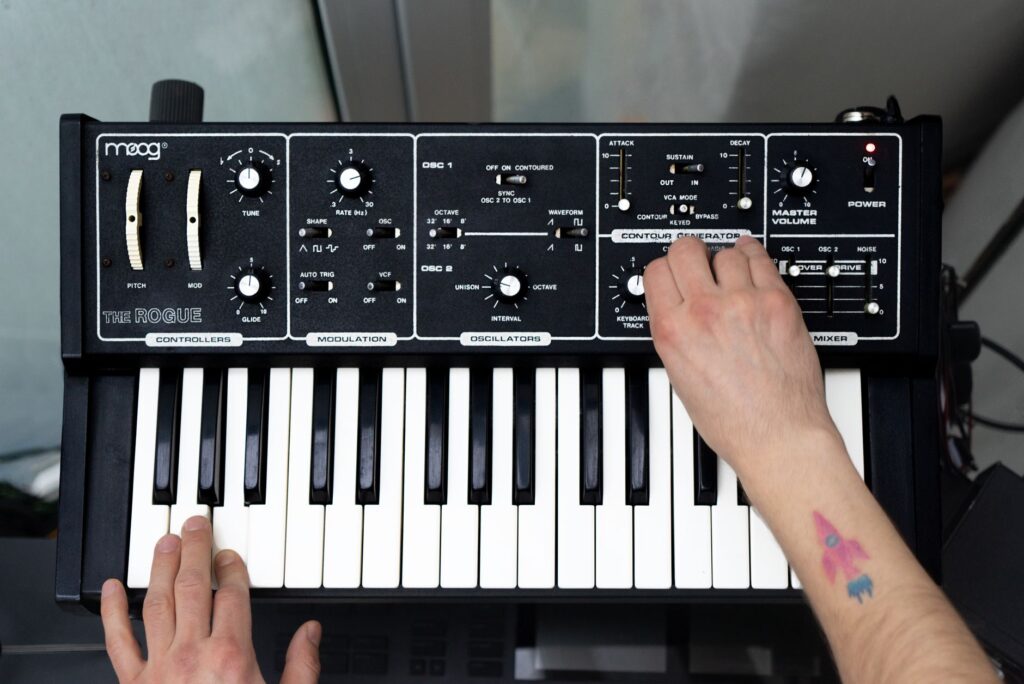
How does a simple synthesizer patch hold the attention of millions of people for over a decade? The answer lies in the human touch behind the machine. While many modern producers rely on digital presets and automated templates, this track feels alive. The lead synth line behaves like a human voice: it rises, falls, grows bright, and then retreats into the shadows. It is an exercise in tension and release that has rarely been matched in the history of electronic music.
The structure of the track can be broken down into four distinct emotional phases:
- The ambient introduction: a three-minute space of reflection and emotional preparation.
- The progressive build: the introduction of the iconic synth pluck that gradually opens its filter.
- The emotional peak: the sudden, dramatic silence that strips away the drums, leaving only the raw melody.
- The euphoric release: the moment the full analog bassline and drums crash back into the mix, creating absolute release.
A legacy that cannot be condensed
Many have tried to edit this track down for radio play or compilation albums, but every edit feels like a compromise. When you cut the introduction, you cut the soul of the song. You cannot have the light without the darkness that preceded it. This is why the track remains a monument. It stands as a physical proof that electronic music is not just utility music for clubs: it is art of the highest order.
Reclaiming the sacred space of the dancefloor
We must fight for the return of patience in electronic music. We must reject the pressure to turn every piece of art into a quick piece of content. If you are an artist who refuses to compromise your vision for the sake of the algorithm, we invite you to submit your music to our collective. We are building a sanctuary for those who still believe in the power of the journey.
The next time you find yourself on a dancefloor, close your eyes. Forget the cameras, forget the lights, and forget the crowd around you. Wait for the music to build. Let the silence teach you how to feel again. Strobe is still playing, and it is waiting for you to listen.